
 We have been invited to Yale University to screen as part of the annual ECAASU Conference – the East Coast Asian American Student Union. It is a cold February night as two hundred students gather in a theater to watch the film and talk. This particular audience is all about the connections…
“Did Sikhs think there would be an internment like in World War?”
–
“I see parallels between the Sikh and Jewish experiences. Is there a theology of martyrdom for Sikhs?”
“I am half-Japanese and my family lived through internment. I see the parallels now like never before. Discrimination in times of war impacts Sikh and Muslim Americans the same way it has affected me!”
–
The questions were compelling, and Sharat and I did our best to share our notes from the road. Afterward, a seven-year old Sikh girl named Tejpal comes up to me, “I really liked your movie.” “Which part was your favorite?” I ask. “All of it,” she says.
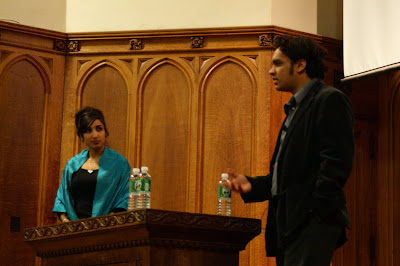 The conversation continued the next day as students met in our workshop.
–
“There is a difference between news and stories. Until I heard the stories and saw the tears, I never realized the extent of the pain,” shares Carie.
–
–
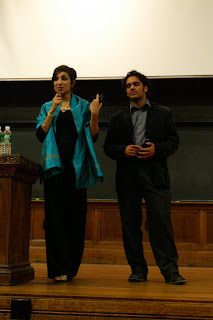 “What ways have stereotypes impacted your own lives?” I ask.
–
“When I was young, people assumed I was ‘the model minority,'” says Tina. “Other kids would borrow my homework, counselors didn’t help me, and I didn’t seek help because that would break the stereotype. I was drowning under the myth!”
“Yes, there are two extremes,” adds Tricksey. “We are the lotus flower sex symbol or the nerd. We can’t be both. It wasn’t until college that I saw my experience as part of the Asian American experience. The culture is shaping you and you don’t even know it until later on!”
“I see how stereotypes actually benefit those who want to go to war,” begins Willie. “It was useful for those in support of war in our government and media to hold up a picture of the enemy to us. We were already primed to see our Middle Eastern men as terrorists and call them enemies instead of our brothers and sisters fighting the same problems. It becomes harder to launch into war when you see them as people.”
–
“So how should our communities respond?” I ask Willie.
“So how should our communities respond?” I ask Willie.
–
“I want people to remember the strength of the black community,” he says. “And how much that strength has to teach others in this country how to fight for social justice. I lived in Tucson when Balbir Sodhi was murdered and remember that pain. All our struggles are not disjointed – it is ONE struggle that is divided.”
 Willie’s conviction makes me think of a story that a Sikh man told me after our screening the night before: “Growing up in St. Louis, I put up with racism on the subway all the time, but since moving to New Haven, I run into 13 and 14 year olds who call me bin Laden! One morning, a group of black high school kids surrounded me on my way to work. They were about to jump me, when I asked them, “What if I called you ‘n–‘”?
–
Perhaps the great trick of racism is that all of us our guilty of it – even those of us who have gone through it ourselves. It blinds us from seeing that common struggle that Willie describes. Remembering this solidarity – our shared experience of racism and our common struggle against it – was the theme of our visit at ECAASU.
 “I’m leaving the film and our discussion feeling hopeful,” Tina concludes. “We feel empowered to go back to our campus and do something – because now we know we’re not alone.”
–
You can read all the stories and reflections from our audience at ECAASU here.
Thank you to Saveena Dhall, Director of the Asian American Cultural Center, Nancy Liang, and all the students who made our visit to ECAASU at Yale possible! I took a final wistful walk across campus before leaving…